Part I: The Watermelon Assembly Line
Did I mention it is hot here? If not, let me be clear: it is an air fryer, and the humidity is relentless. A twenty-minute cold shower only buys you about ten minutes of relief before you are right back to being sticky and drenched. I managed to rig my wall fan to blow directly onto the bed, but the mosquito net chokes out half the airflow. On top of that, the property-wide Wi-Fi is incredibly weak. Simple browsing and messaging work fine, but any hopes of serious photo editing or advanced communication are officially grounded for the week.
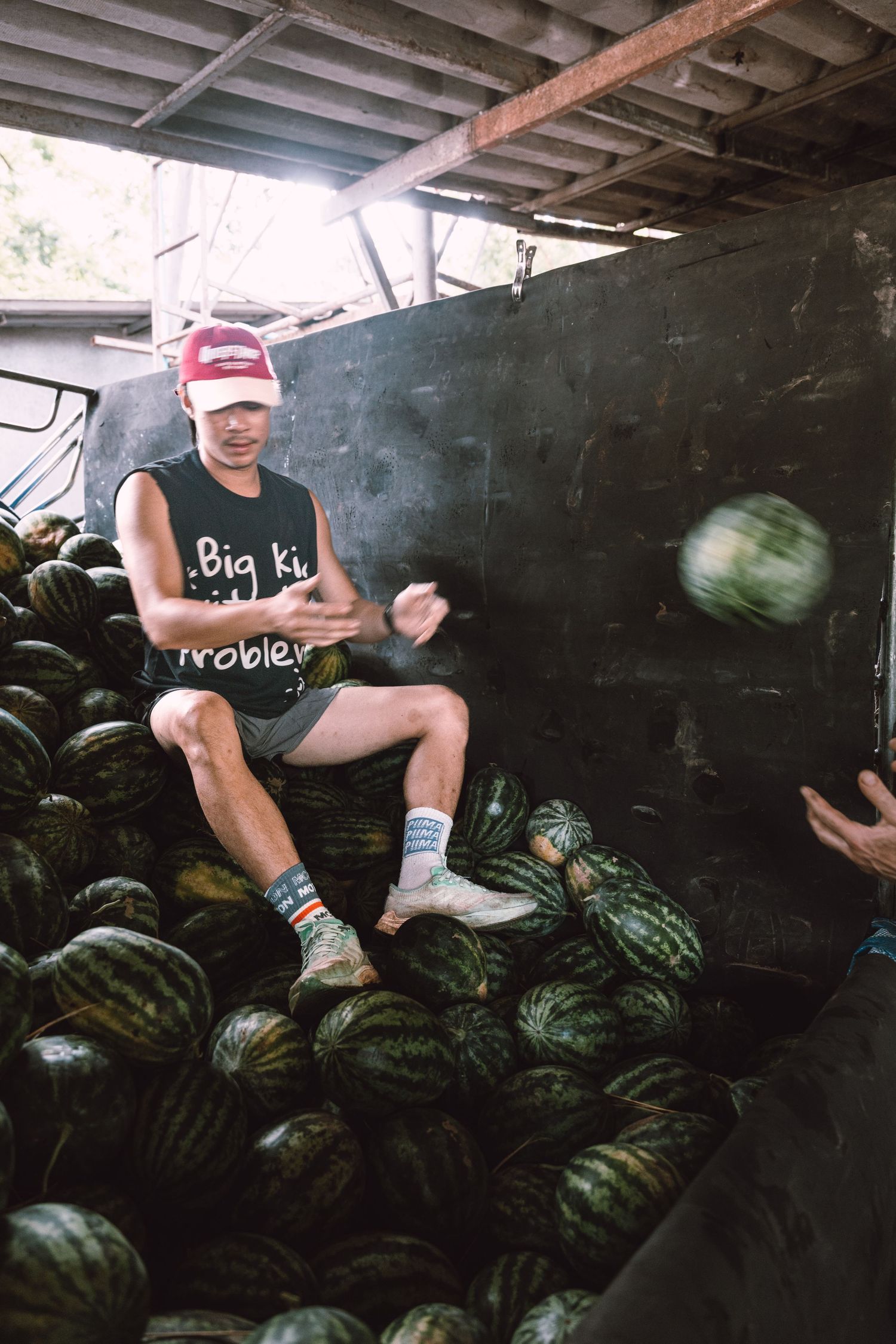
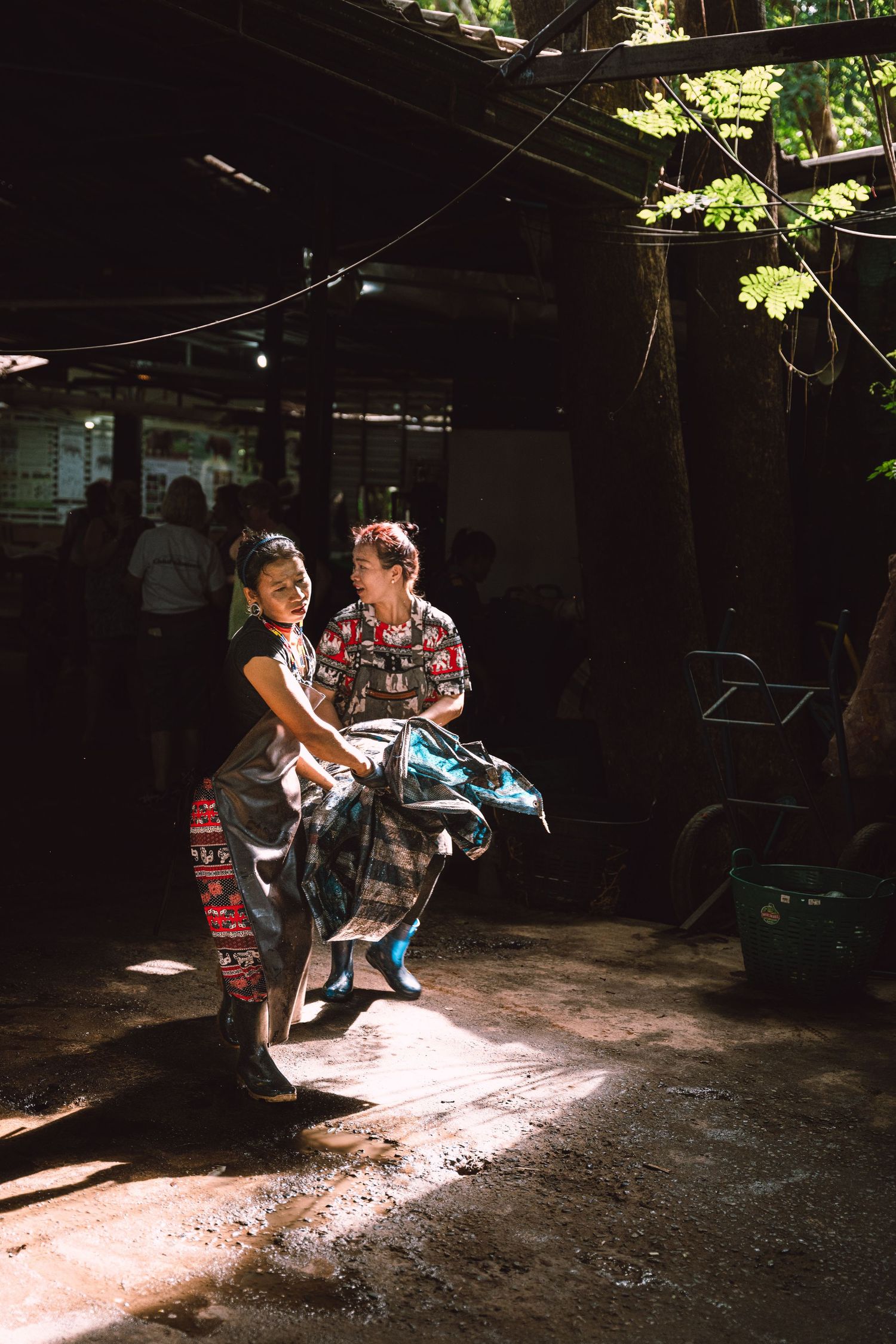
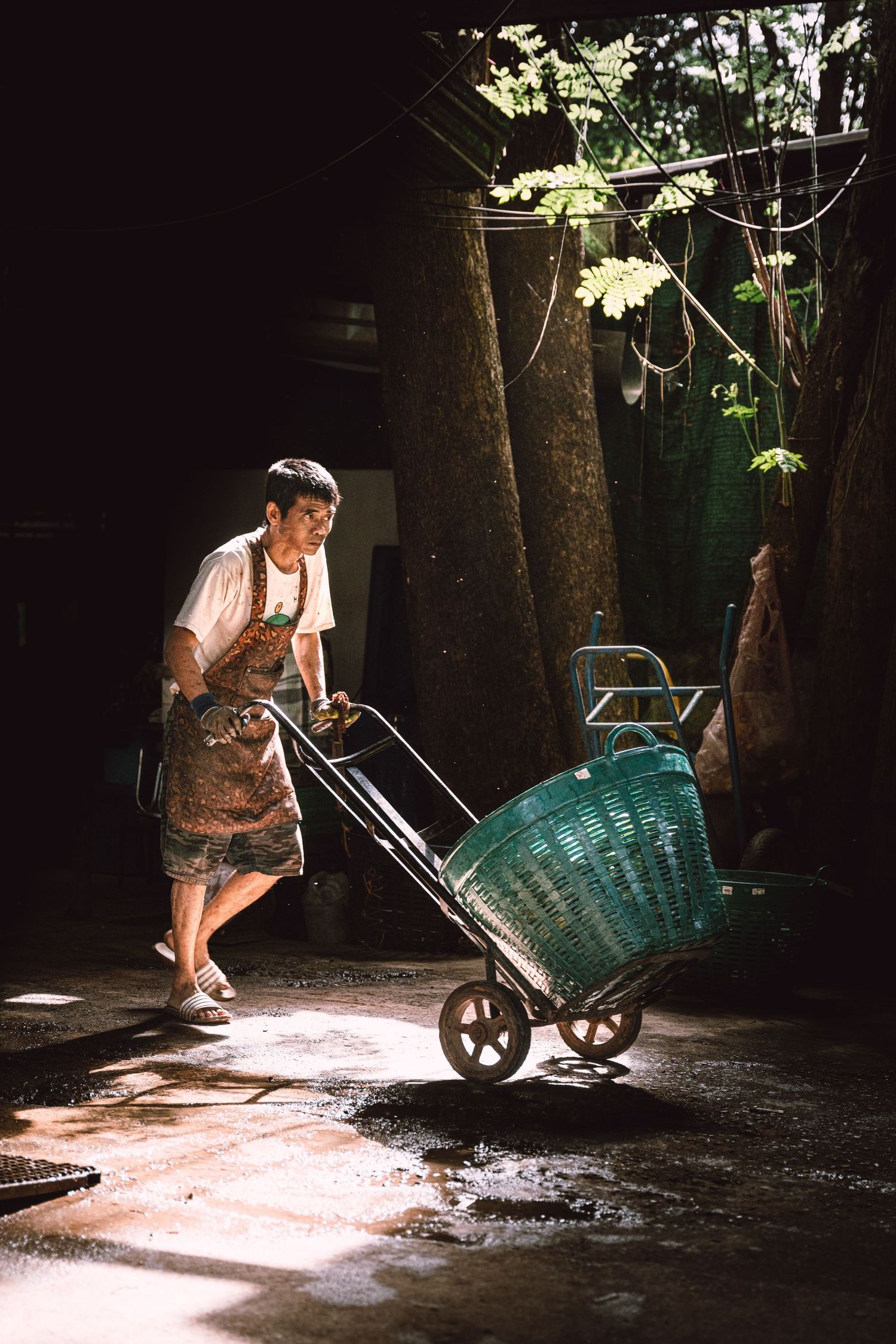
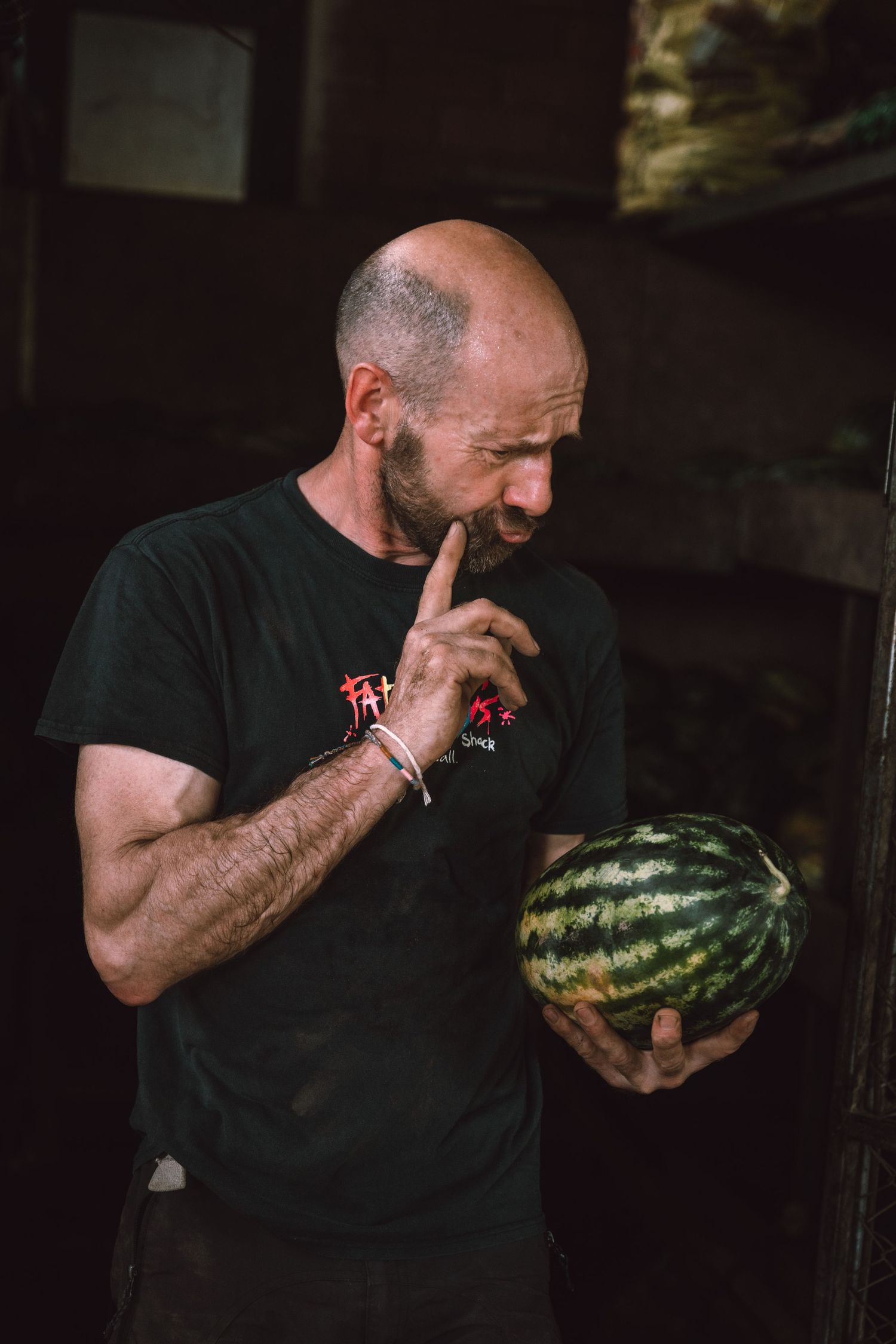
After a solid breakfast of fresh fruit and an iced coffee, I strapped on my 70-200mm lens, expecting a casual morning walk to meet the elephants (our scheduled AM activity). Instead, a massive watermelon truck arrived at the gates. Our introduction walk was immediately pushed to the afternoon so our group could gear up to unload and store a few tons of watermelons.
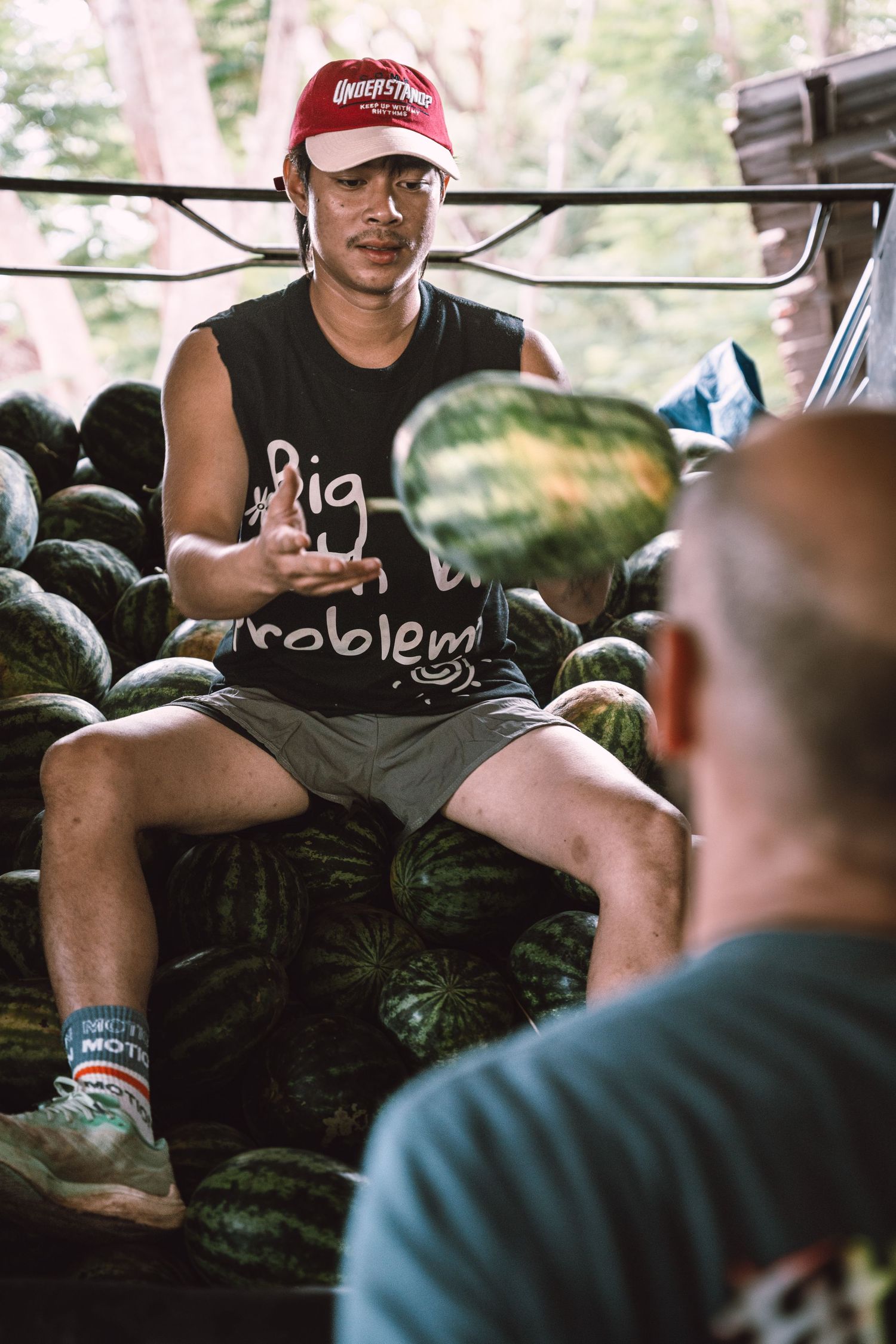
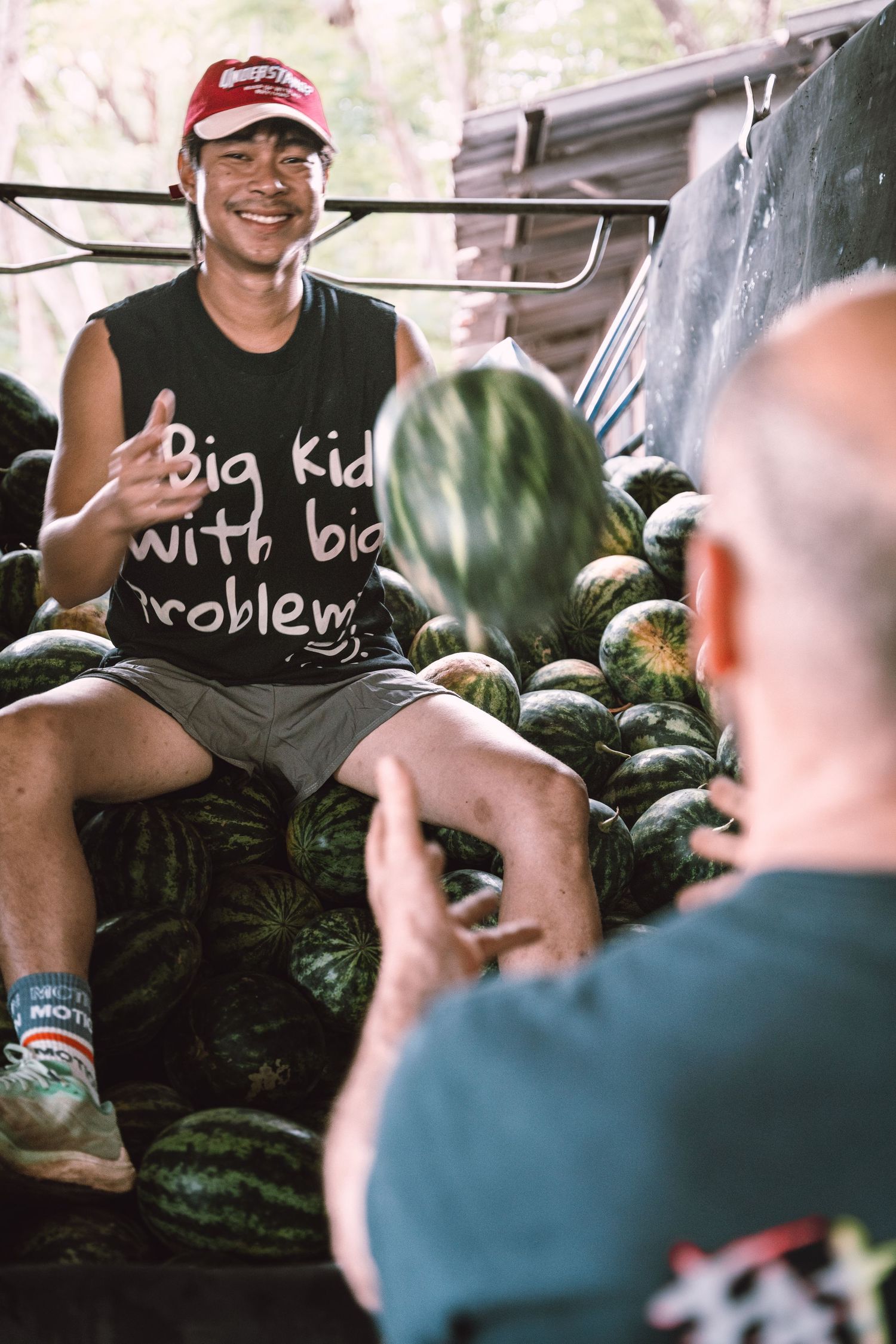
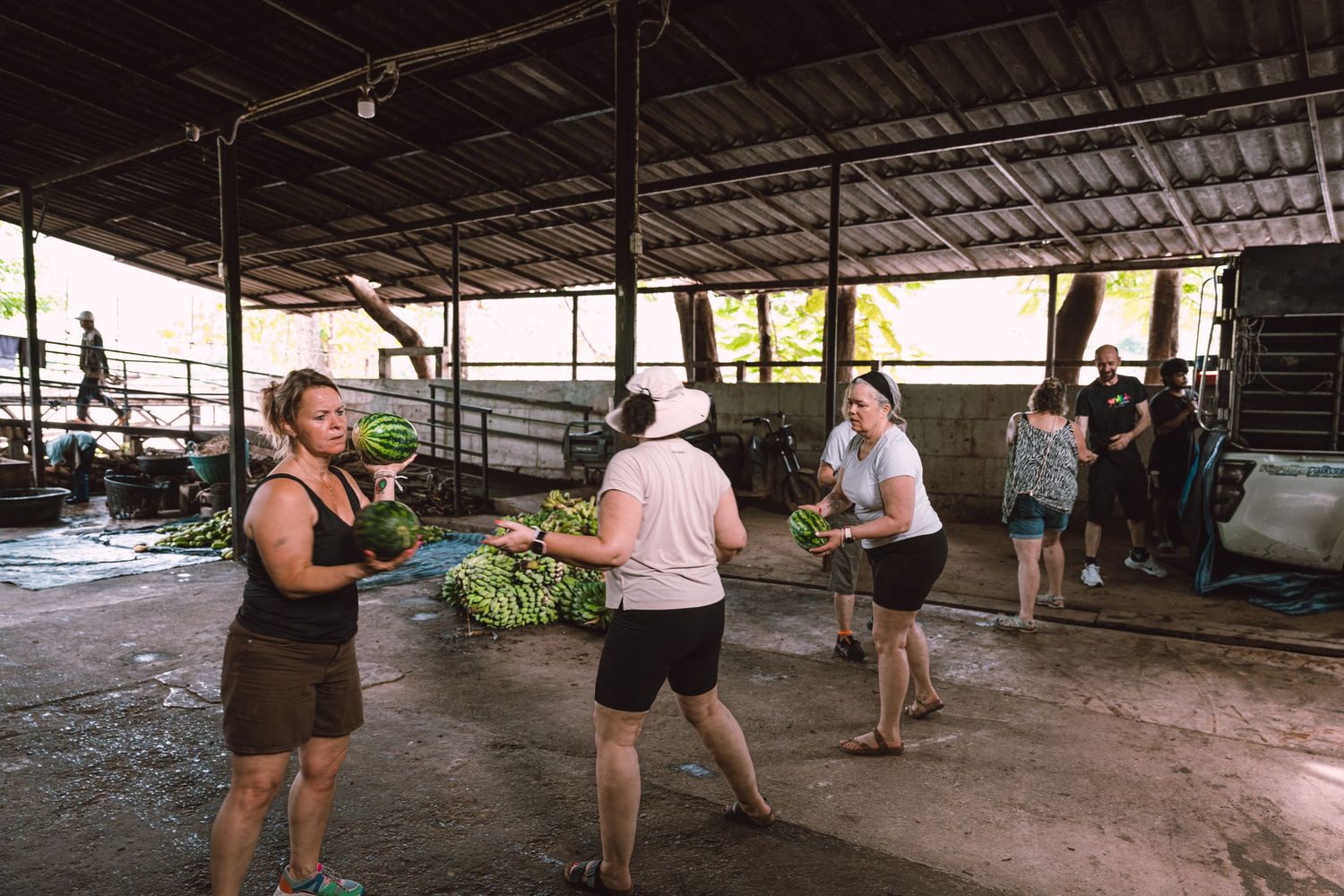
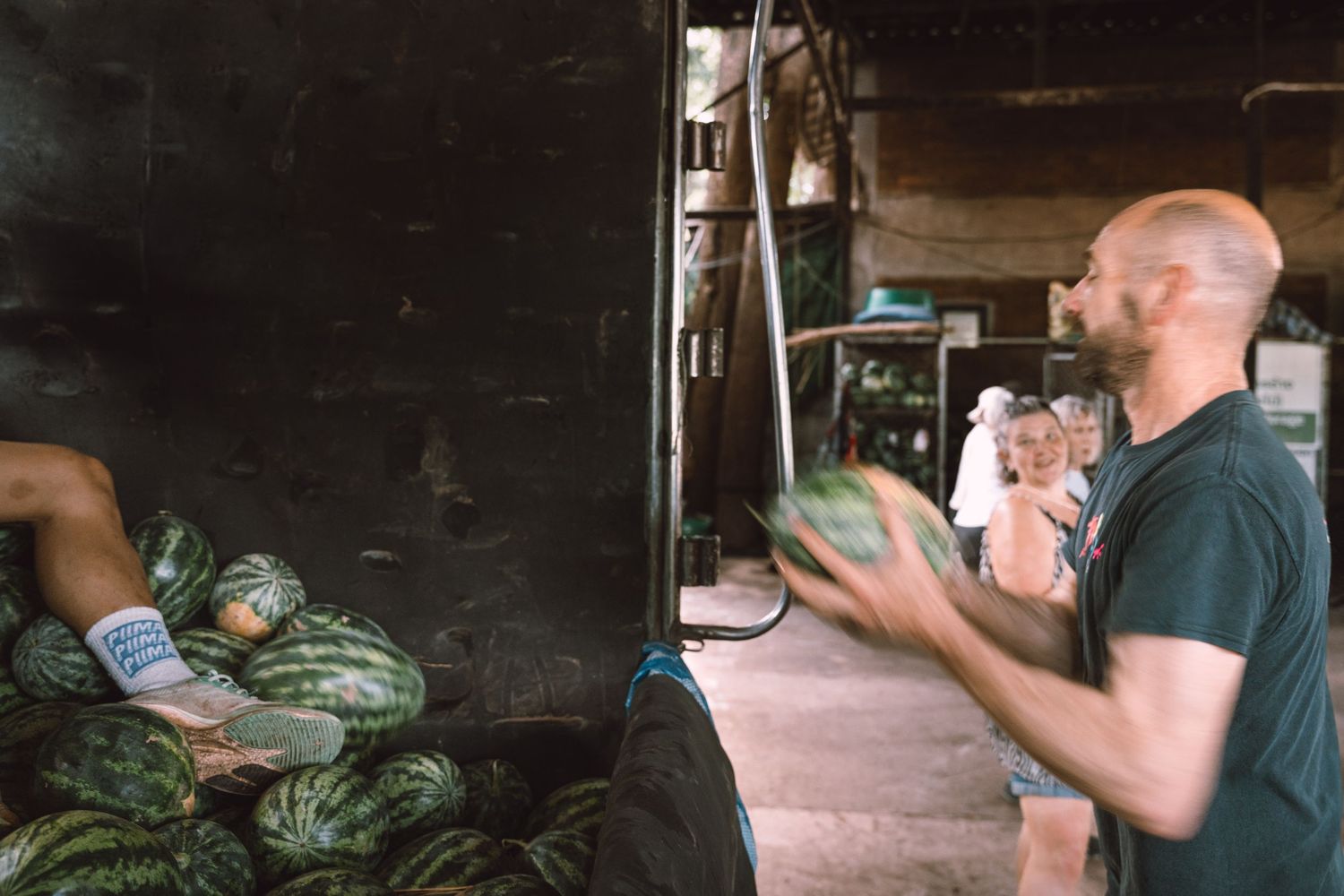
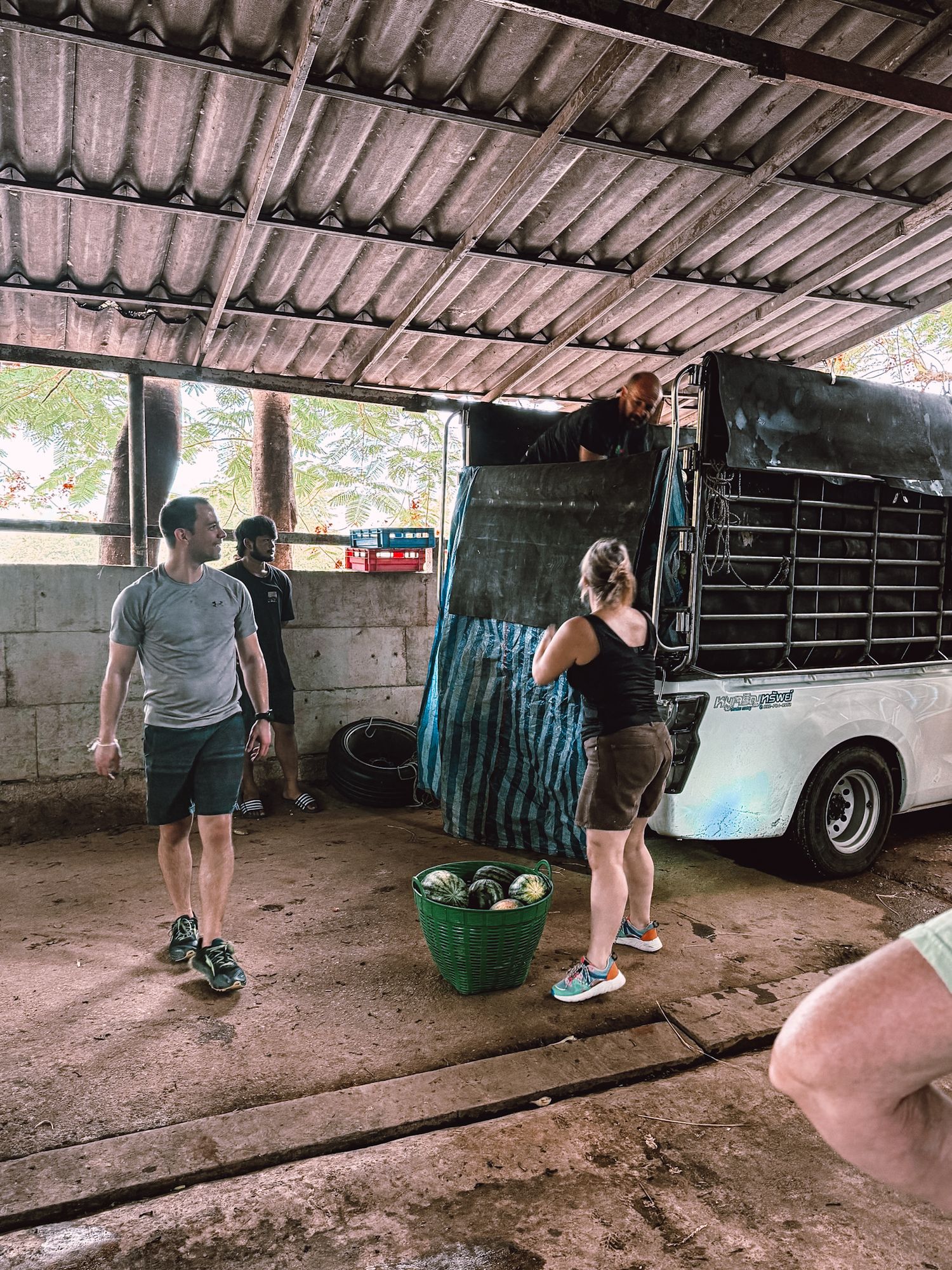
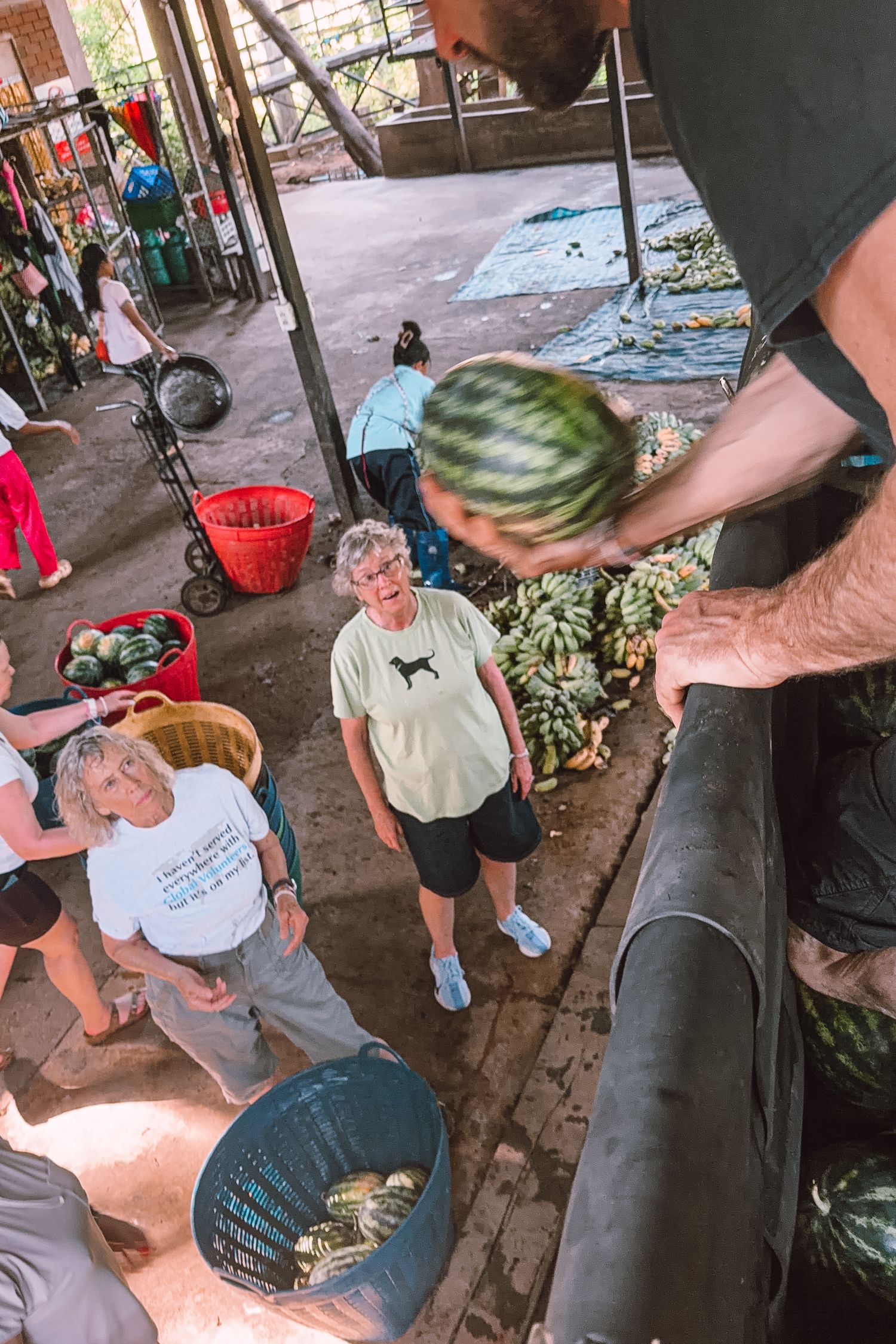
We formed a human assembly line to move the cargo. I jumped back and forth between playing quarterback up in the truck bed, tossing the melons down, and acting as the receiver on the dirt road. Like most things I do, I came out swinging and sprinted, rather than jogged. Operating at NASCAR pace in this climate is a rookie mistake. Fifteen minutes into the shift, my shirt was entirely saturated.
Fruit Logistics, by the numbers
Crew: 9 Volunteers (Typical group is ~20)
Shift Duration: 2.5 Hours
Pacing Average: ~1 Watermelon every 8-10 seconds
Total Volume: 1,200 to 1,300 Watermelons moved
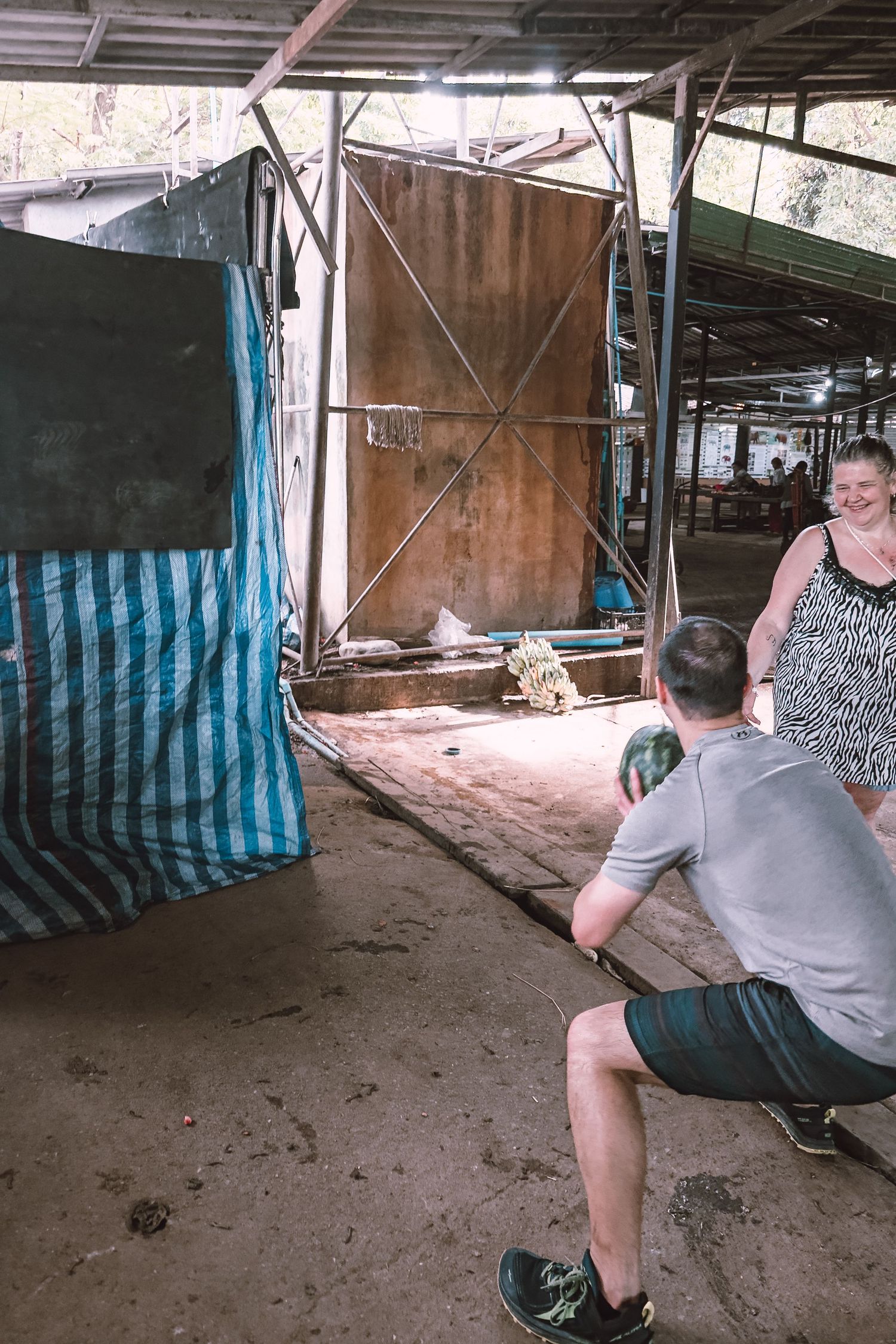
Because our group was so small, we had to run a single line for two and a half hours, whereas a full volunteer block would have split the labor. Standing on the ground as the receiver, I wanted to protect my back and shoulders from the repetitive impact, so I treated every incoming melon catch as a functional squat or lunge to absorb the weight before handing it off. By the time we finished, my body felt completely spent. Elephants supposedly drink 150 to 200 liters of water a day, and I honestly felt like I needed that to replace what I had sweated out.
Part II: Midday Meditation
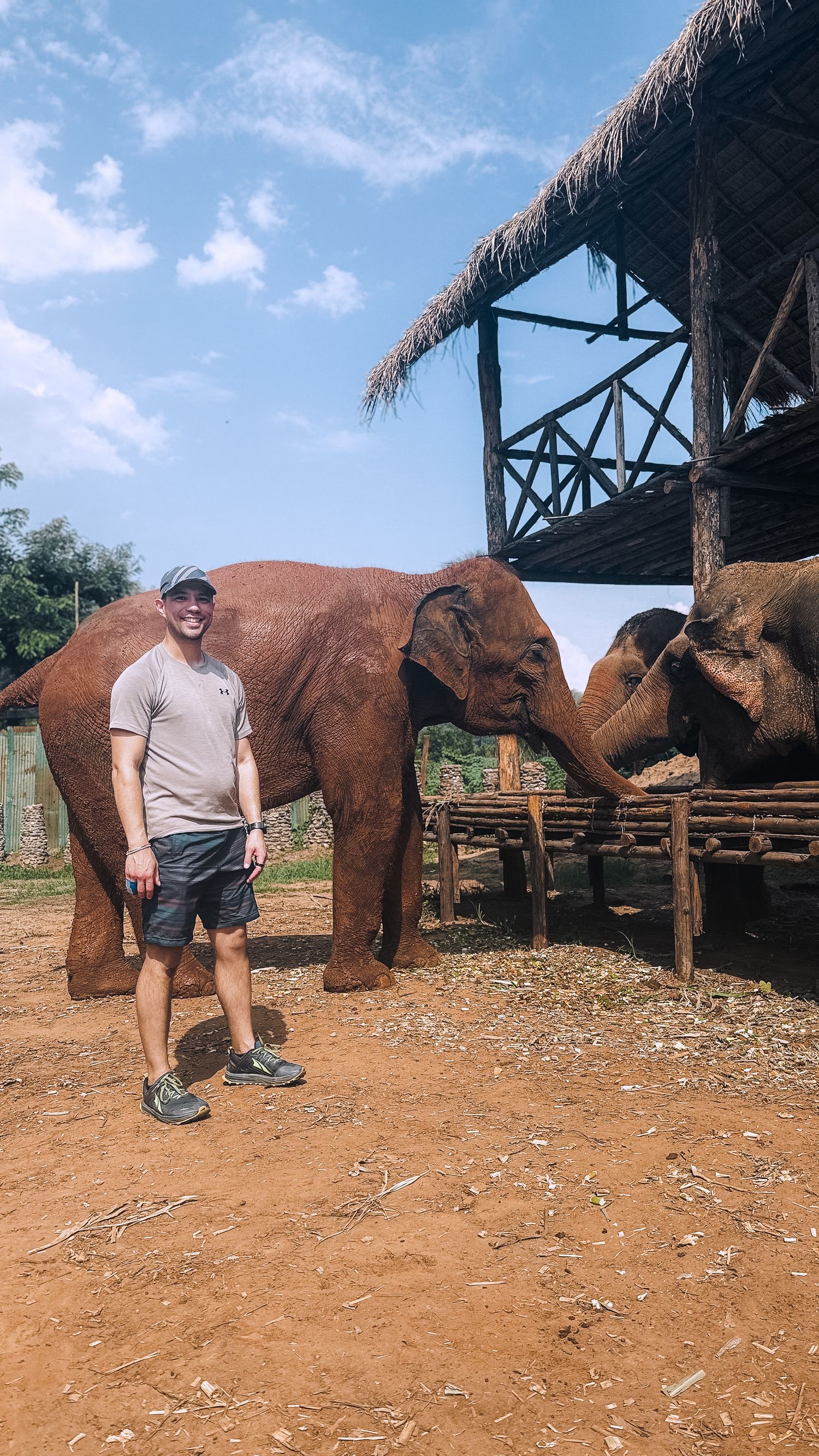
After a great lunch and a cold Chang beer to wash down the morning's labor, we finally set out for our walk across the sanctuary grounds. Lathered in sunscreen and supposedly shielded by citronella oil and my 200 THB sun hat, I spent two hours meandering through the grass under a brutal, cloudless midday sun. Despite my preventative measures, the direct sun was unforgiving enough to leave me with a sunburn, yet the experience itself was strangely meditative.
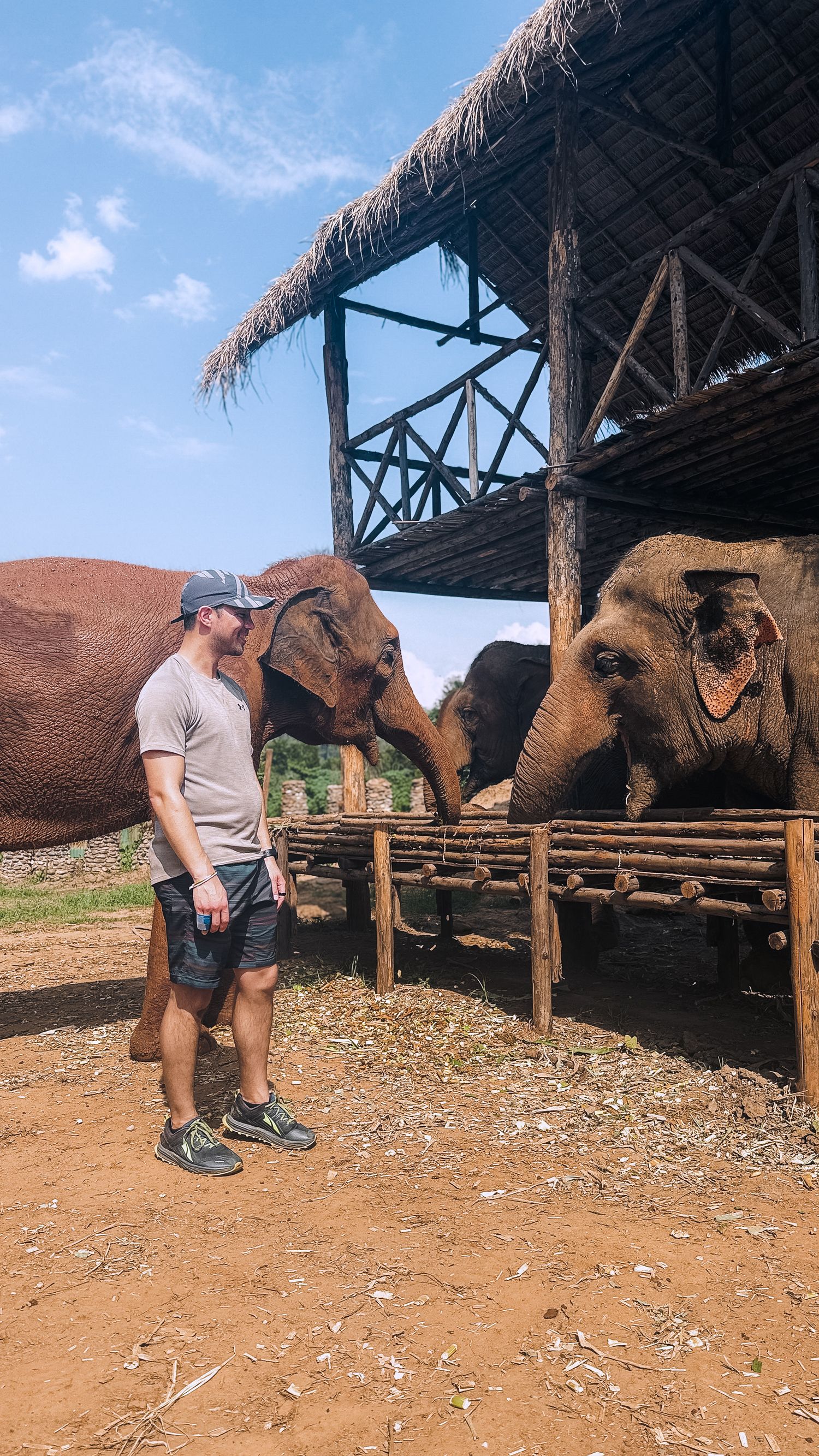
We would stop and observe different herds for 15-20 minutes at a time. Watching them perform basic, daily routines completely slowed me down. I found myself focusing entirely on the small details: how they articulated their trunks, used their massive feet to manipulate food, and navigated the subtle social hierarchies when other elephants approached.
You can easily spot the physical signs of prior abuse from their former lives in logging, riding, and performing, but watching them roam freely now is incredible. Even when they approached us out of pure curiosity, our guide had us step back, as the strict no-touching policy is fiercely enforced for their well-being. Down by the river, several elephants were fully submerged, rolling and splashing in the water to beat the heat, while those on dry land continuously kicked mud and dirt over their spines to shield their skin from the sun.
Part III: The Barefoot Ritual
While waiting for dinner, I crossed paths with Lek, the legendary and well-recognized founder of the sanctuary. Every afternoon at 4:00 PM, she heads out into the fields to feed the herds and help the mahouts (caregivers) call them back to their night enclosures. While they are allowed to roam free during the day, they are sheltered at night.
There is a famous, beautiful ritual that happens during this time with an elephant named Thong Ae, known as the "butterfly girl." The moment Thong Ae spots Lek, she walks straight over and uses her trunk to gently pull off Lek's rain boots and socks. The sanctuary team believes she does this because she wants her caretaker to walk barefoot and experience the exact same grounding connection to the earth beneath her feet.
Lek returned to the main dining platform after the feeding routine and struck up a casual conversation with me, asking my name and where I was from. Resisting the urge to fan-boy, I kept it simple and mentioned that I had spent some time here back in 2013. I pulled up my phone to show her a few photos from that trip, and she instantly recognized them. Sadly, she told me that the distinct elephant I remembered most vividly had since passed away.
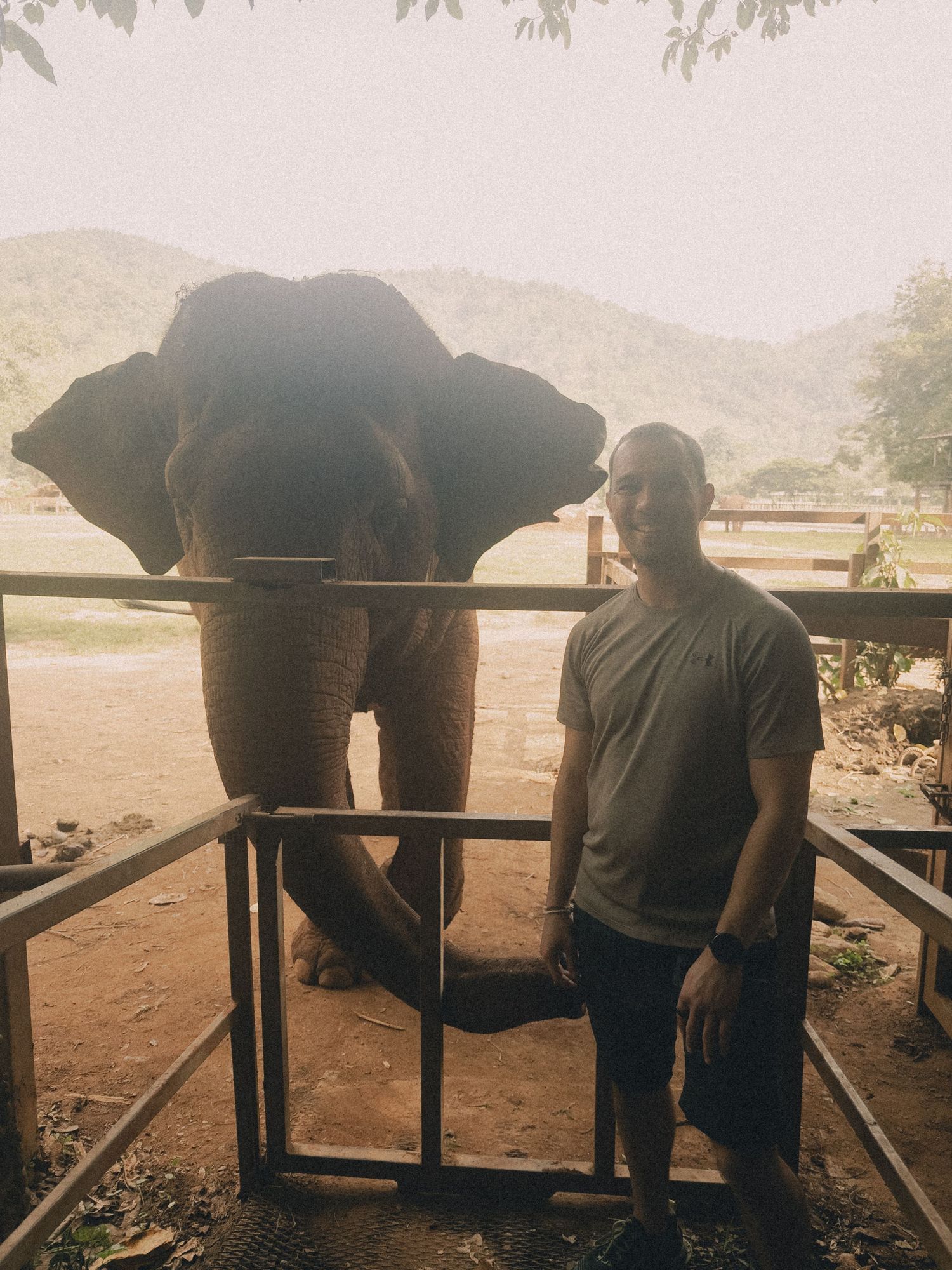
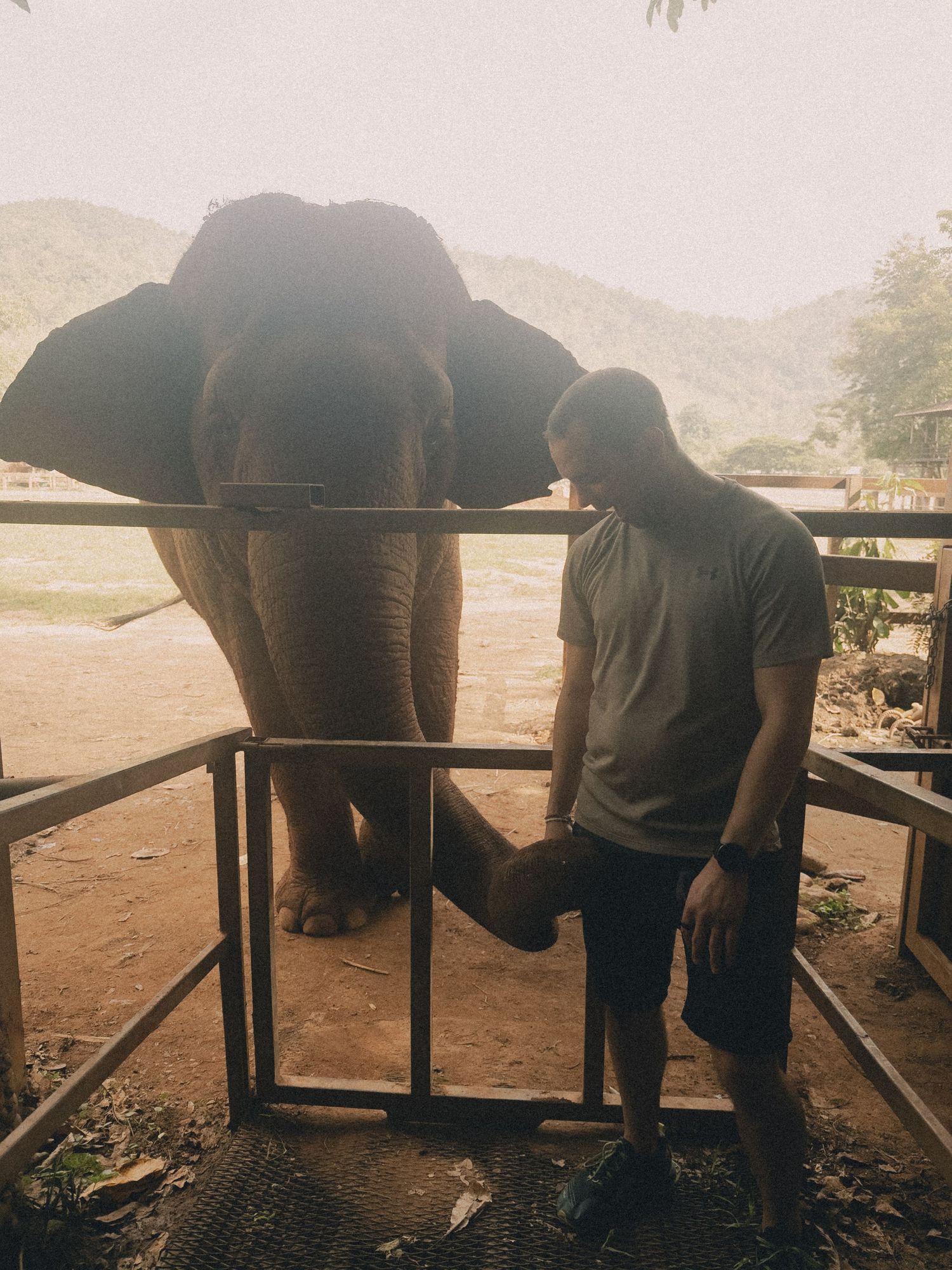
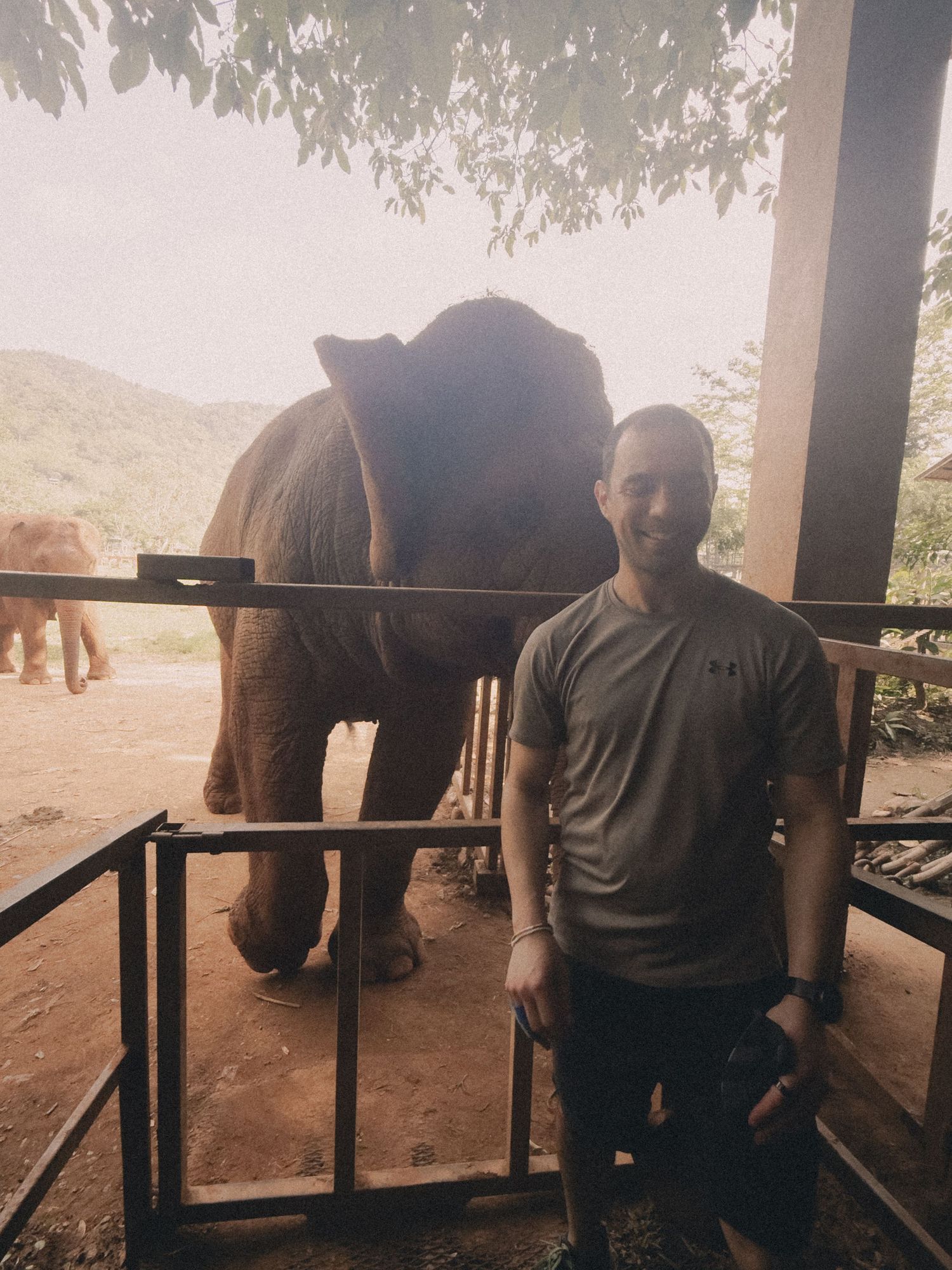
However, the matriarch of the baby elephant that famously tore up my backpack over a decade ago happened to be standing right by the platform. As we watched, that same elephant, Faa Mai, reached her trunk right through the protective railing and tried to wrap it around my leg. Lek grabbed my phone and snapped a quick photo of the interaction. It was an incredible, full-circle moment.
Part IV: Golden Hour Access
The day ended with an unbelievable gesture of hospitality. The park has nearly doubled in both acreage and elephant population since I was last here, and the vast majority of the new land is completely restricted to the public to let the herds live naturally. One of the herds in particular routinely navigate through the river for a quick dinner near the viewing platform before continuing on to their hostel. Typically, guests view the daily 4:30 PM river crossing from a high suspension bridge. Lek looked at my camera setup, told me to skip the bridge, and brought me straight down to ground level right on the river bank to shoot the incoming herd at eye level.
To top it all off, she invited me to shadow the sanctuary’s staff photographer tomorrow morning. He is taking me out personally into the fields to shoot the herds in the early morning light.
Meet at the coffee shop at 7:00 AM. I will absolutely be there.